 Every Nation Explained
The Entire History of Iran | 3200 BC – 2026
Iran has been conquered again and again: by Greeks, Arabs, Mongols, Turks, Afghans, Russians and the British. And every time, something strange happened. The conquerors ended up becoming Persian. This is the entire history of Iran, from the first cities of Elam to the war of 2026, told as one story.
Historical borders on the maps are approximate. Events of 2026 are described as of the publication date.
Prologue ▶ 0:00
Persepolis. Spring, 330 BC.
In the great hall of the Persian kings, a young Macedonian conqueror is celebrating. The wine has been flowing for hours. Then, according to ancient writers, someone picks up a torch.
By morning, the most magnificent palace on Earth is a forest of burning columns.
Alexander the Great has destroyed the Persian Empire. It should have been the end of Persia.
It wasn't. And it wouldn't be the end when the Arabs came, or the Mongols, or the Turks, or the Afghans, or the Russians and the British.
Because every single time, something strange happened. The conquerors stayed… and slowly, they became Persian. They spoke its language, copied its courts, read its poetry, and handed their empires to Persian scholars to run.
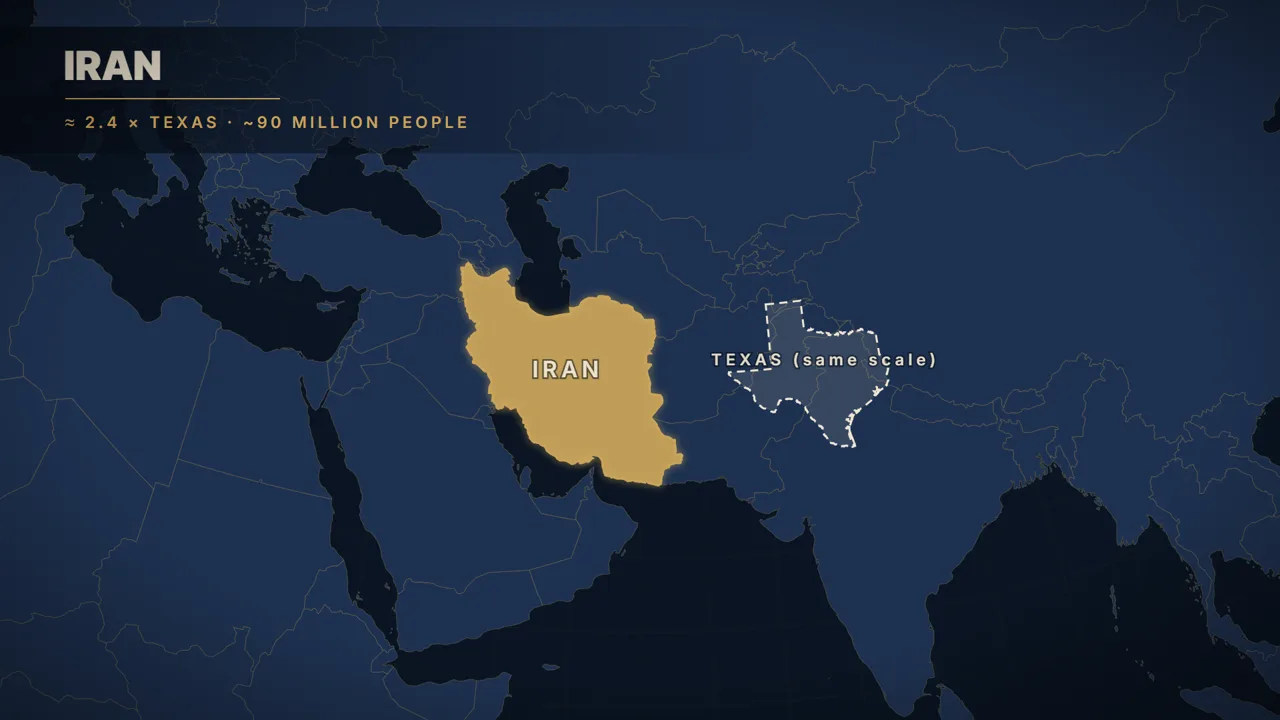
This is Iran. A country about two and a half times the size of Texas, home to around ninety million people, and one of the oldest continuous civilizations on Earth.
Most Americans know it from the headlines: revolution, hostages, sanctions, and in 2026, war.
But that is only the latest chapter of a story that began more than five thousand years ago.
So how did the land of Cyrus the Great become the Islamic Republic? And how has Iran survived every empire that tried to swallow it?
To find out, we have to go back to a time before anyone had heard the word "Persia."
Before Persia ▶ 1:313200 BC – 550 BC
Around 3200 BC, on the plains of southwest Iran, a city called Susa is growing rich. Its people, the Elamites, are already pressing marks into clay tablets, in one of the earliest writing systems in the world. For two thousand years, they trade with the cities of Mesopotamia, and fight them.
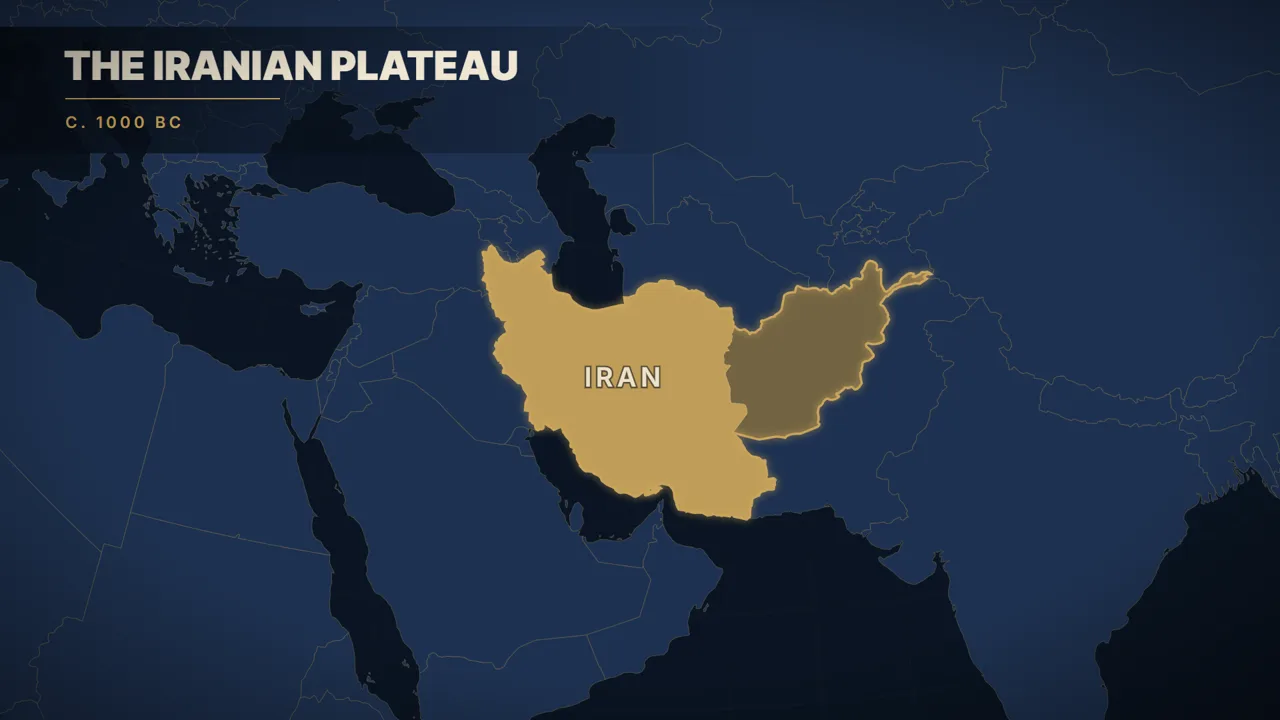
Then, about three thousand years ago, new peoples ride in from the steppes of Central Asia. They call themselves Aryans, and in time, their land will carry their name: Iran.
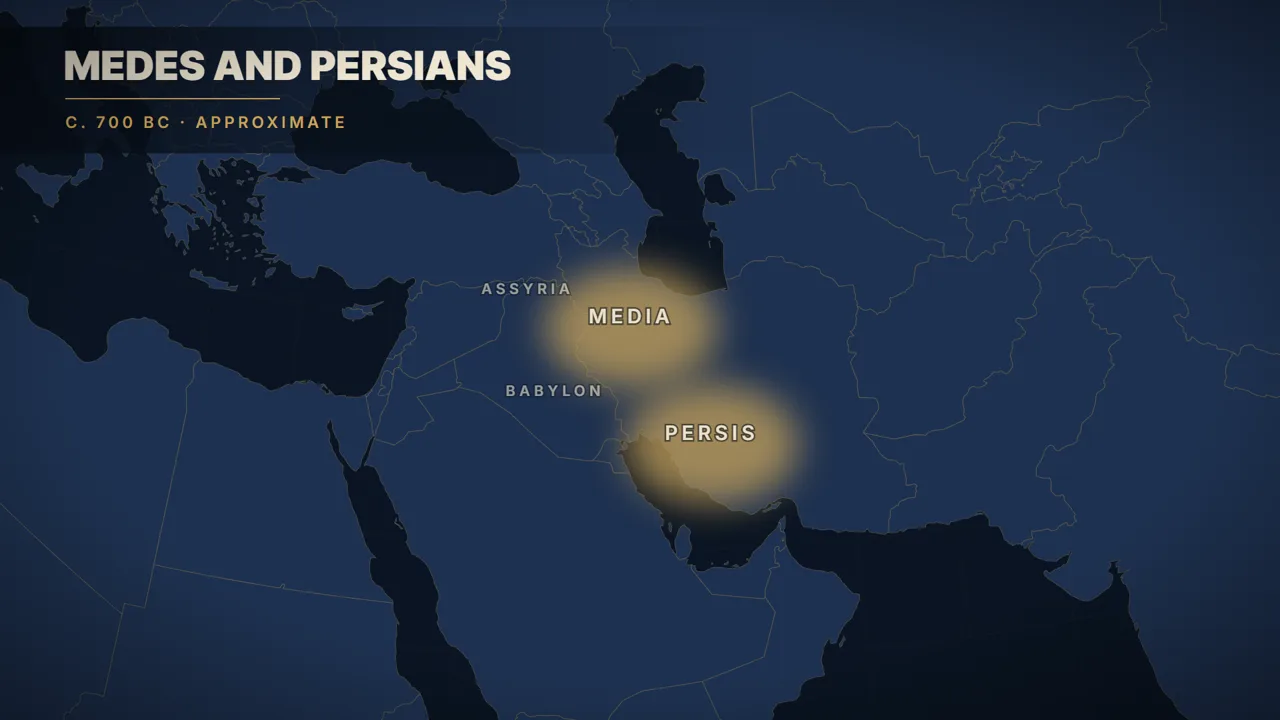
Two of these peoples matter most. The Medes in the north. And the Persians in the south.
The Medes rise first. In 612 BC, together with Babylon, they storm Nineveh, the capital of the terrifying Assyrian Empire, and leave it in ruins.
Now the Medes rule the mountains. And the little Persian kingdom in the south? Just a vassal. Harmless.
That was the Medes' mistake.
The King of Kings ▶ 2:32550 BC – 480 BC
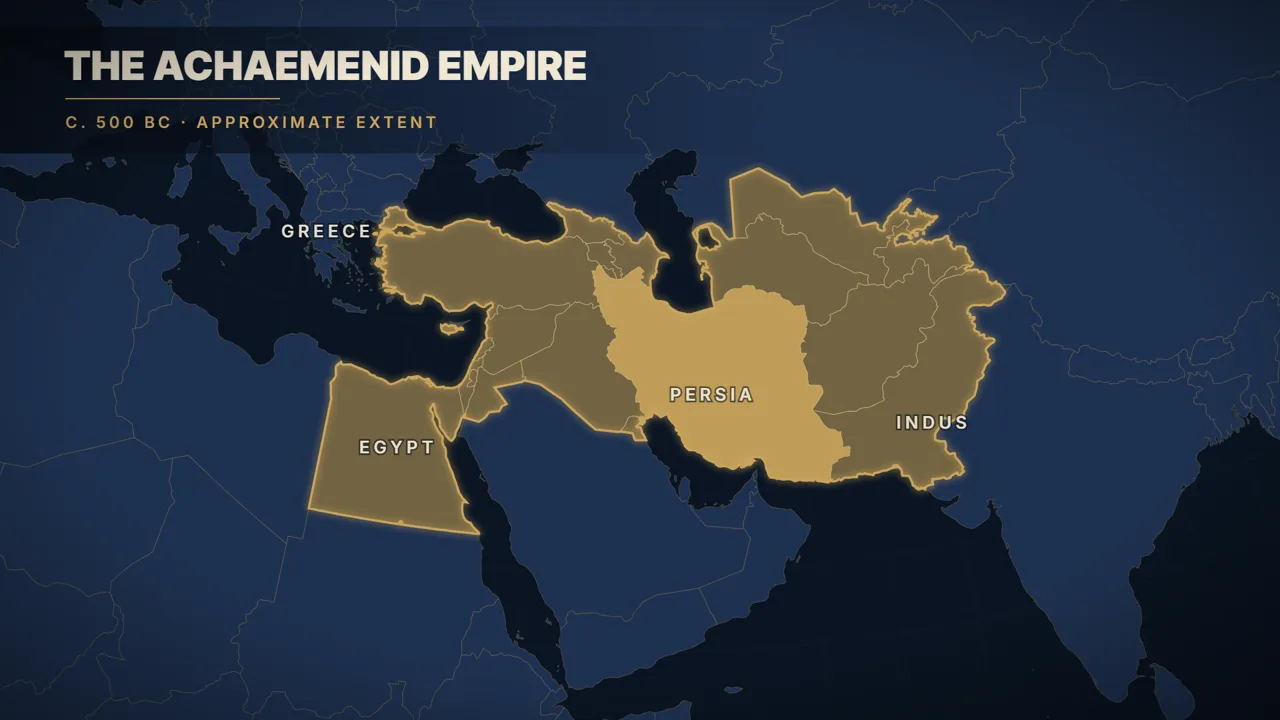
Around 550 BC, a Persian prince named Cyrus rises against his overlord, the king of the Medes. He wins. And he doesn't stop.
He takes Lydia, the kingdom of the fabulously rich King Croesus. Then, in 539 BC, he marches on Babylon, the greatest city of the age. According to the Babylonian chronicle, its gates open without a battle.
What Cyrus does next makes him a legend. He does not burn the temples. He honors the local gods. And he lets the Jewish exiles in Babylon go home to Jerusalem and rebuild their temple. Two and a half thousand years later, the Bible still calls this Persian king "anointed."
His successors keep building. Under Darius the Great, the Achaemenid Empire becomes the largest the world has ever seen, from Egypt and the edge of Greece all the way to the Indus River.
Darius runs it like a machine. Provinces called satrapies, each with its own governor. A standard gold coin. And a dazzling new ceremonial capital: Persepolis.
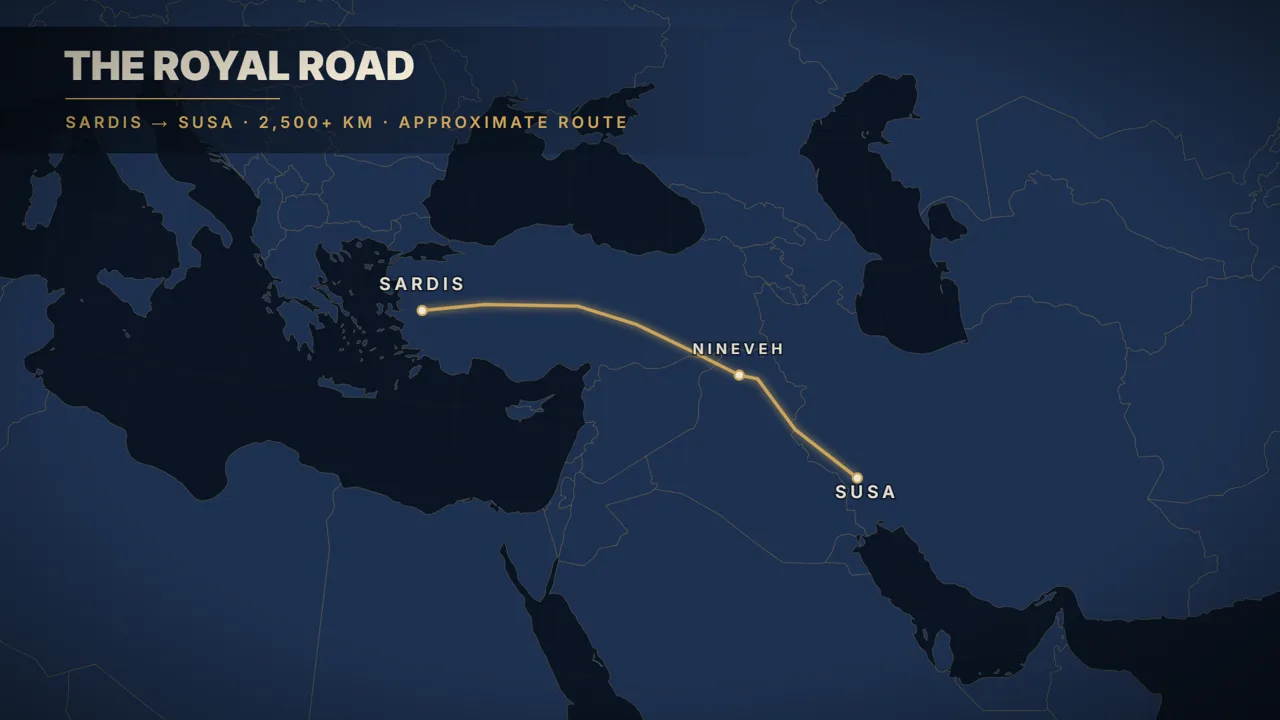
He builds a highway too: the Royal Road, more than two and a half thousand kilometers long, with fresh horses waiting at every station. A royal message can now cross the empire in days instead of months.
The Greek historian Herodotus was so impressed by these riders that his words are carved today on a post office in New York City: "Neither snow nor rain nor heat nor gloom of night stays these couriers from the swift completion of their appointed rounds."
Only one problem is left on the map. A cluster of small, stubborn city-states in the west. Greece.
In 480 BC, Darius's son Xerxes invades with one of the largest armies of the ancient world. At Thermopylae, he breaks the famous three hundred Spartans. He marches into Athens, and burns it.
And then, in the narrow waters of Salamis, the Greeks trap his fleet. Xerxes watches from a throne on the hillside above the shore as his ships are destroyed. The invasion collapses.
Persia has met an enemy it cannot swallow. And one day, that enemy will come back.
The Conqueror Conquered ▶ 4:54334 BC – 224 AD
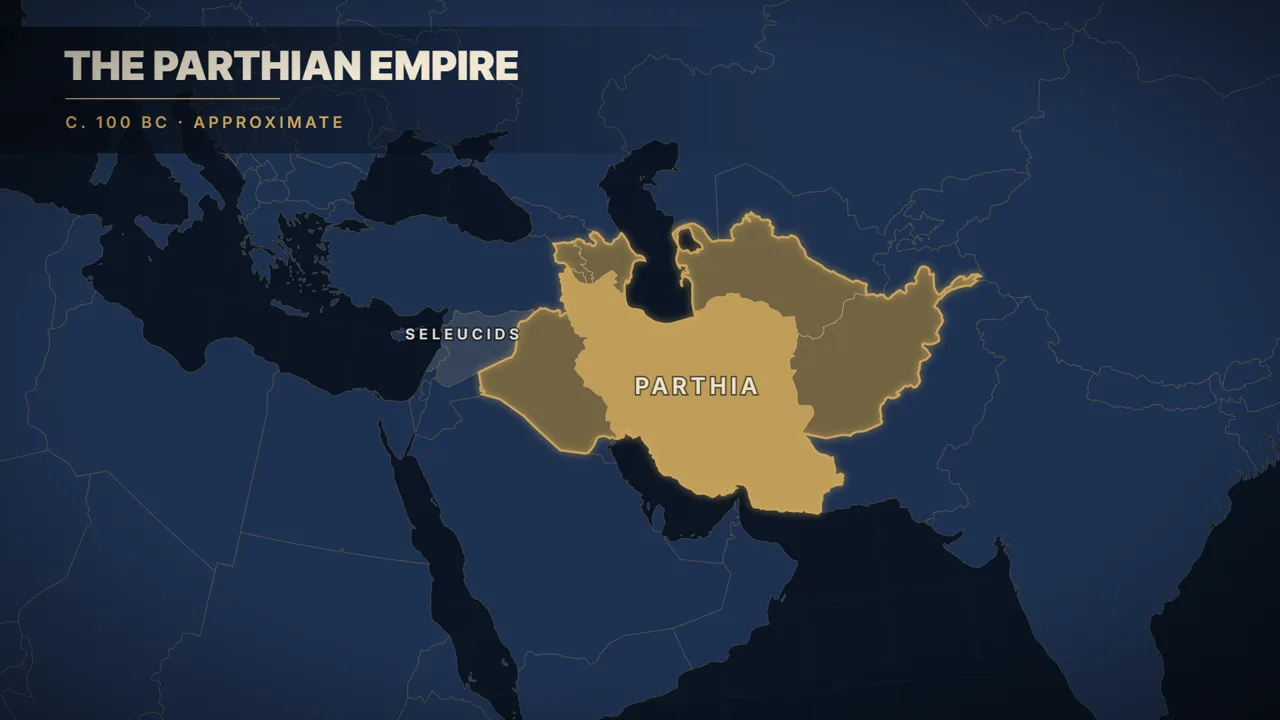
A century and a half later, it does. Alexander of Macedon crosses into Asia in 334 BC, beats the Persian king Darius the Third in battle after battle, and in 330 BC, Persepolis burns.
But now watch what happens. Alexander starts wearing Persian royal robes. He adopts the ceremonies of the Persian court. He marries a woman from the east, and at Susa, he has dozens of his officers marry Persian brides in a single mass wedding.
His Macedonian veterans are furious. The conqueror is being conquered.
Alexander dies young, and his generals tear his empire apart. Within a century, a new Iranian people, the Parthians, push the Greeks out of Iran.
The Parthians fight on horseback with deadly bows. In 53 BC, at Carrhae, they surround a Roman army and kill its commander, Crassus, one of the richest men in Rome. From then on, Rome and Iran face each other as equals.
Rome's Greatest Rival ▶ 5:59224 – 628
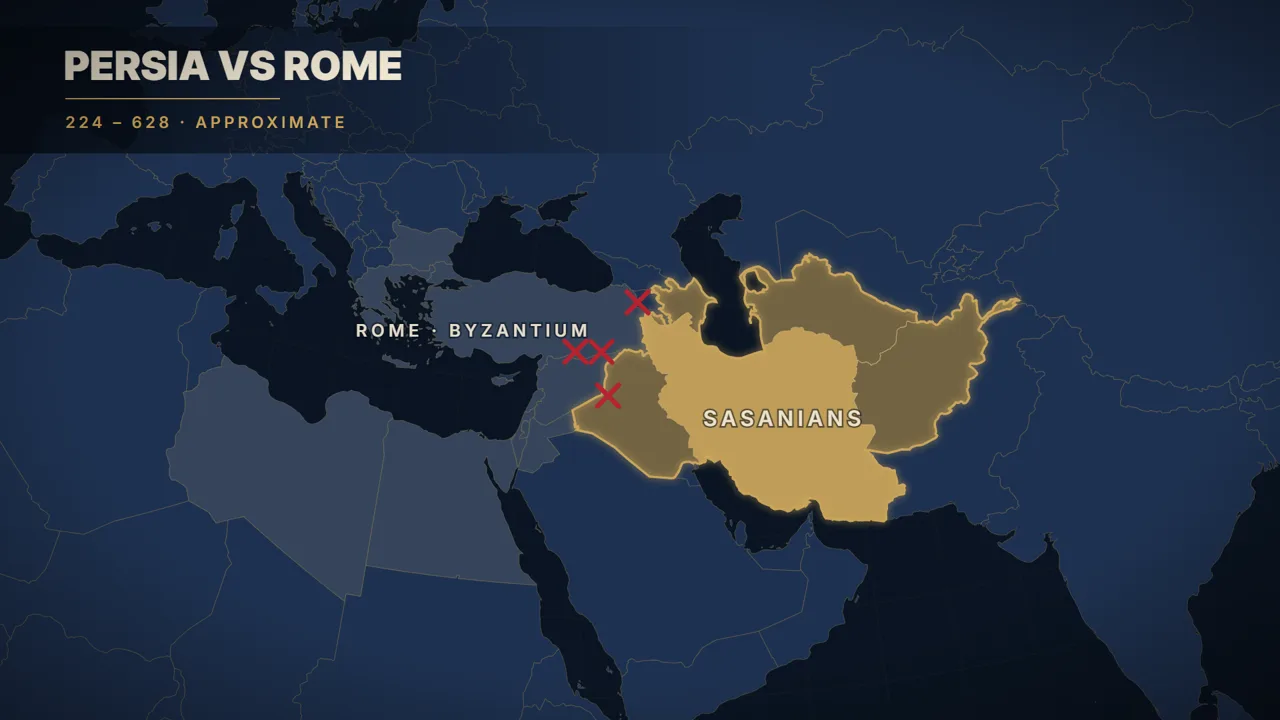
In 224 AD, a new dynasty takes the throne: the Sasanians. They make Zoroastrianism, one of the world's oldest religions, the faith of the state, and they want the glory of the old Persian kings back.
Their second king, Shapur the First, takes something from Rome that no foreign king ever had. In 260 AD, near the city of Edessa, the Roman emperor Valerian falls into his hands, alive.
Shapur has his triumph carved into a cliff, and you can still see it today: one Roman emperor on his knees before a Persian king, and another, Valerian, held captive by the wrist. Valerian never sees Rome again.
For four hundred years, Persia and Rome, and later Byzantium, fight war after war over Mesopotamia and the Caucasus. The last one, from 602 to 628, is so long and so brutal that it bleeds both empires dry.
And that is exactly when, out of the deserts of Arabia, a new power appears.
The Language That Refused to Die ▶ 7:05636 – 1219
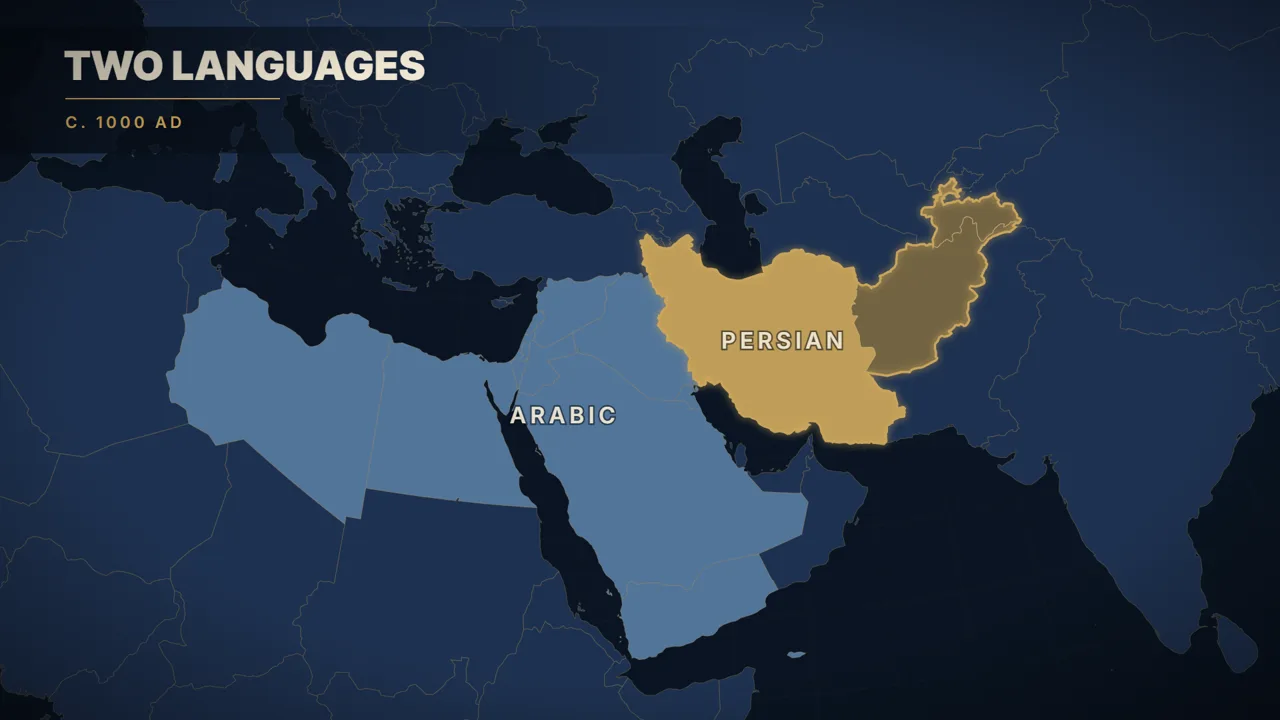
Arab armies, united by the new faith of Islam, crush the Persians at Qadisiyyah, and again at Nahavand. The last Sasanian king, Yazdegerd the Third, flees east for years. In 651, according to tradition, he is killed near Merv by a miller, for his jewels.
After twelve centuries of Persian kings, Iran is ruled by outsiders.
Over the next centuries, most Iranians become Muslim. In Egypt, Syria and Iraq, Arabic replaces the old languages. But in Iran, something different happens. Persian survives.
Around the year 1010, a poet named Ferdowsi finishes a book he has worked on for some thirty years: the Shahnameh, the Book of Kings. About fifty thousand couplets on Iran's legendary heroes, written almost entirely in Persian.
Legend says the sultan promised him a gold coin for every couplet, then sent silver instead. Years later, the sultan regretted it and sent the gold. But as the caravan entered Ferdowsi's town through one gate, the poet's coffin was leaving through another.
Legend or not, his book did what armies could not. It saved a language, and with it, Iran's memory of who it was.
Meanwhile, Persian minds lit up the golden age of the Islamic world. Al-Khwarizmi, whose name gave us the word "algorithm." Avicenna, whose medical textbook was taught in European universities for centuries. Omar Khayyam, mathematician and poet. And later, Rumi, often called one of the best-selling poets in America today.
Fire from the Steppe ▶ 8:471219 – 1747
Then the horsemen come.
First the Seljuk Turks, who conquer Iran, and then run their empire through Persian ministers, in Persian. Then, in 1219, something far worse: the Mongols of Genghis Khan.
City after city is wiped off the map. At Nishapur, Persian chroniclers wrote, not even the cats and dogs were spared. The population of the Iranian plateau will take centuries to recover.
And yet, within two generations, the Mongol khans of Iran have converted to Islam, hired Persian officials, and become patrons of Persian art. The pattern repeats.
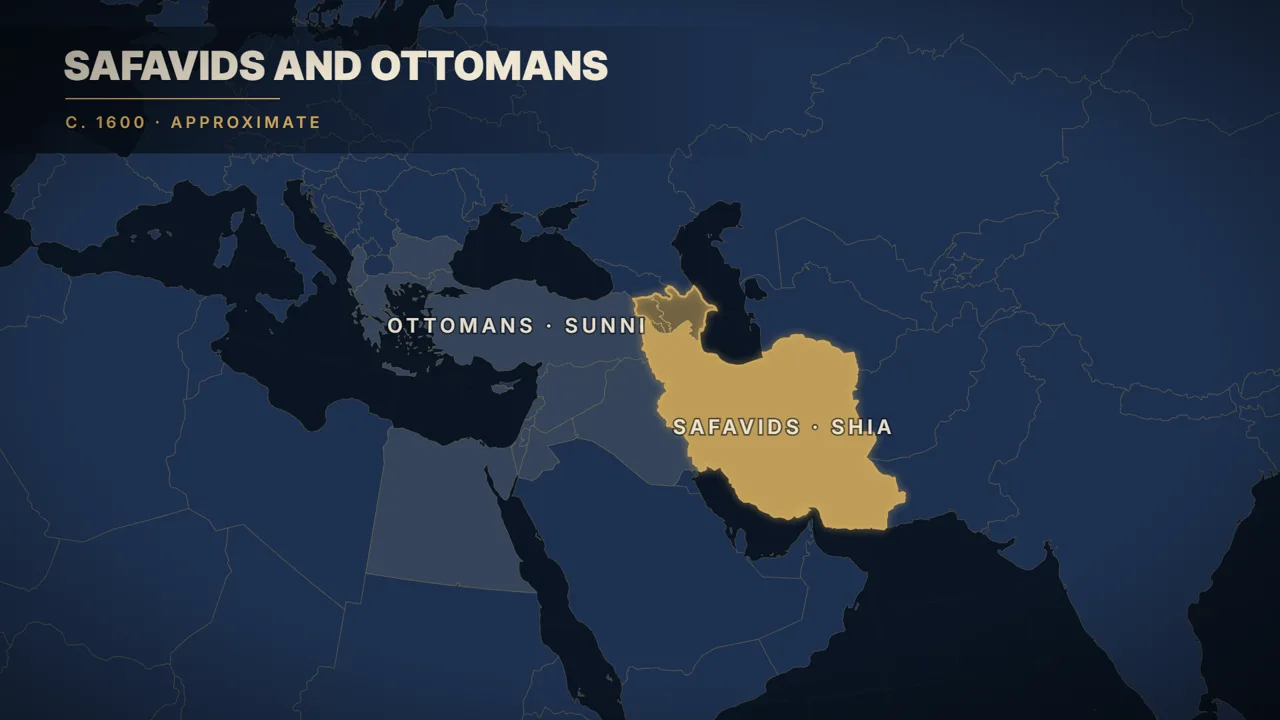
In 1501, a teenager named Ismail takes the city of Tabriz, crowns himself shah, and makes a decision that still shapes Iran today. He declares Shia Islam the religion of the state. It sets Iran apart from its Sunni neighbors, above all the mighty Ottoman Empire, and gives the country an identity that will outlive every dynasty that follows.
A century later, Shah Abbas the Great moves his capital to Isfahan and fills it with turquoise domes, bridges and one of the largest public squares in the world. Persians said it with pride: "Isfahan is half the world."
But empires rot from within. In 1722, an Afghan army besieges Isfahan for months, until the starving city surrenders, and the Safavid state collapses.
Out of the chaos rises one last conqueror: Nader Shah, a soldier of humble birth, who drives out the invaders, and then invades India. In 1739, he sacks Delhi and carries home the Peacock Throne and the Koh-i-Noor diamond, which today sits among the British Crown Jewels.
It is the last time Iran will conquer anyone. For the next two centuries, Iran will be the one being carved up.
Between Two Empires ▶ 10:461786 – 1941
In 1786, a warlord of the Qajar tribe makes a small town called Tehran his capital. His family will rule Iran for more than a century.
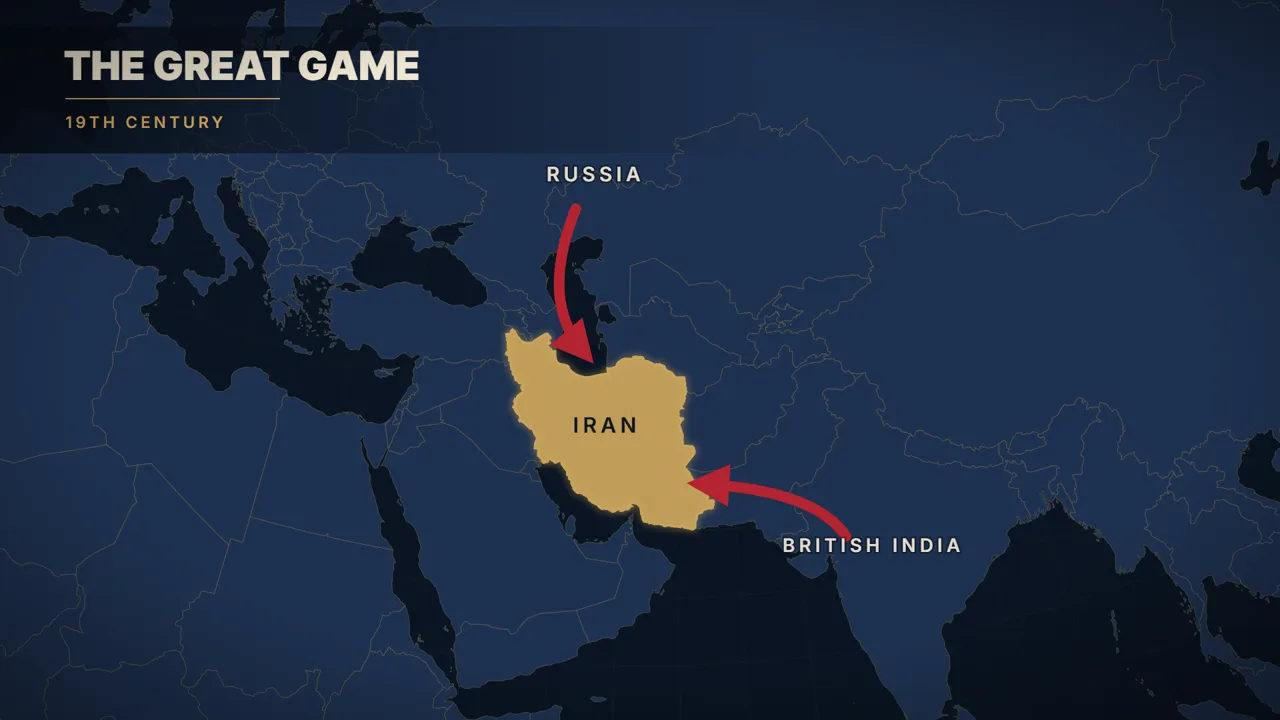
But the world has changed. Two industrial giants are closing in. Russia from the north. Britain, from India, in the south.
In two wars, Iran loses to Russia the lands that are today Georgia, Armenia and Azerbaijan. Britain wants Iran as a buffer for India. Iran becomes a pawn in what historians call the Great Game.
To pay for their lavish courts, the Qajar shahs sell off their country, piece by piece, to foreign companies. In 1890, the shah hands a British businessman control of Iran's entire tobacco industry. Every leaf grown, sold or smoked.
Then a senior cleric issues a ruling: smoking tobacco is forbidden. Across the country, Iranians put down their pipes. Even, it is said, the women of the shah's own palace. The shah gives in. For the first time, ordinary Iranians have forced their ruler to back down.
That spirit grows into a revolution. In 1906, Iran wins a parliament, and one of the first constitutions in Asia.
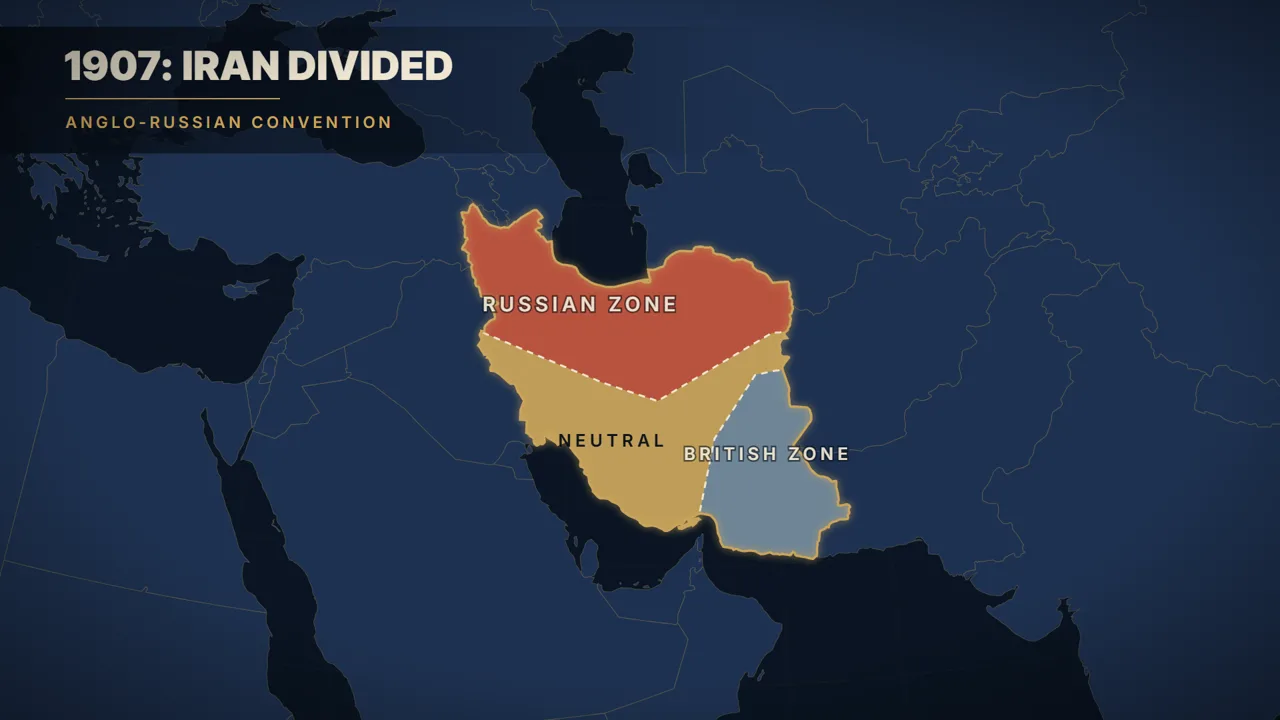
One year later, Russia and Britain quietly split Iran into zones of influence. Nobody asks Iran.
And then, in 1908, in the southwestern desert, a British drilling team strikes oil.
The Anglo-Persian Oil Company, the company that will later become BP, will pump Iranian oil for decades. Iran gets only a small share of the profits.
In 1921, a tough army officer named Reza Khan marches on Tehran. Four years later, he crowns himself shah, founding the Pahlavi dynasty. He builds roads, a railway, modern schools, and in 1935, he asks the world to stop saying "Persia" and use the country's own name: Iran.
But he rules with an iron fist. And when he leans toward Germany in World War Two, British and Soviet troops invade in 1941, force him off the throne, and put his young son, Mohammad Reza, in his place.
The Coup ▶ 13:061951 – 1953
After the war, Iranians want one thing above all: control of their own oil.
In 1951, Prime Minister Mohammad Mossadegh nationalizes the oil industry. He becomes a global celebrity, and Time magazine names him its Man of the Year.
Britain strikes back with a blockade that chokes Iran's oil exports. And in Washington, a plan begins to take shape.
In August 1953, a CIA officer named Kermit Roosevelt, grandson of President Theodore Roosevelt, helps organize a coup together with British intelligence. Crowds are paid, generals are won over, and Mossadegh is overthrown.
For decades, Washington would not fully admit it. In 2013, declassified CIA documents finally acknowledged the agency's role in writing.
The shah returns, with more power than ever, and with America firmly behind him. For many Iranians, 1953 is the moment their democracy was stolen by foreigners. It is a memory that still shapes how Iran sees the United States.
The Shah and the Storm ▶ 14:171953 – 1979
For twenty-five years, the shah races to modernize. Land reform. Votes for women. Factories and universities. After 1973, oil money floods in, and Tehran fills with highways, nightclubs and Western brands.
But the wealth does not reach everyone. The secret police, SAVAK, is feared. Critics are jailed or driven into exile. Among them, a stern cleric named Ruhollah Khomeini.
In 1971, the shah throws the party of the century in the ruins of Persepolis, to celebrate two and a half thousand years of Persian monarchy. A city of luxury tents rises in the desert. Kings and presidents fly in from around the world. Even the food is flown in, from a famous restaurant in Paris. Millions of Iranians watch on television, many of them still living in poverty.
Seven years later, the storm arrives. In 1978, protests sweep the country: students, workers, bazaar merchants, liberals, leftists and religious Iranians, all marching together.
On January 16th, 1979, the shah boards a plane in Tehran. He will never return.
Two weeks later, Khomeini flies home after more than fourteen years in exile. On the plane, an American reporter asks him what he feels, coming back to Iran. His answer, through a translator: "Nothing."
Millions are waiting for him in the streets. By April, after a referendum, Iran is an Islamic Republic, with Khomeini as its Supreme Leader.
Then, in November, students storm the US Embassy in Tehran. Fifty-two Americans are held hostage for four hundred and forty-four days. They are freed only minutes after Ronald Reagan is sworn in as president. Relations between Iran and America have never recovered.
The Long Standoff ▶ 16:201980 – 2026
In September 1980, Saddam Hussein's Iraq invades. The war lasts eight years, kills hundreds of thousands, and Iraq uses chemical weapons. When Khomeini finally accepts a ceasefire in 1988, he says it is like drinking poison.
After his death in 1989, Ali Khamenei becomes Supreme Leader, and will hold power for more than three decades.
Those decades bring reformist hopes, and mass protests in 2009. A long fight over Iran's nuclear program: sanctions, a deal in 2015, and an American exit from that deal in 2018. In 2022, the death of a young woman, Mahsa Amini, in police custody sets off protests under the slogan "Woman, Life, Freedom."
And the confrontation with Israel and the United States keeps escalating. In June 2025, Israel and Iran fight a twelve-day war, and American bombers strike Iran's nuclear sites.
Then comes 2026. After Iran's currency collapses and protests are violently suppressed, the United States and Israel launch a war against Iran on February 28th. Ali Khamenei is killed in the opening strikes. His son, Mojtaba, is chosen as the new Supreme Leader.
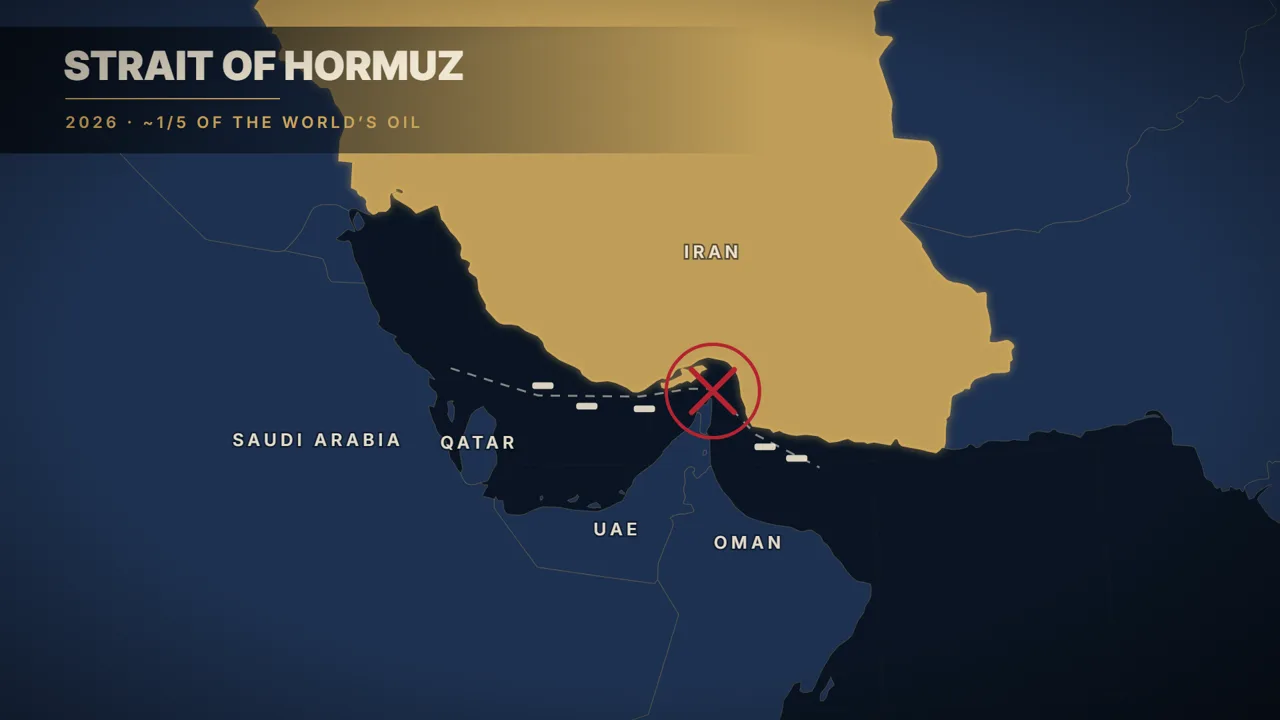
Iran answers with missiles and drones across the region, and closes the Strait of Hormuz, the narrow passage that carries about a fifth of the world's oil. Ceasefires and talks, brokered first by Pakistan and later through Qatar, come and go. As we publish this video, the war is still not over.
Epilogue ▶ 18:04
So how has Iran survived five thousand years?
Not by always winning. It lost to the Greeks, the Arabs, the Mongols, the Russians and the British. Its kings were overthrown again and again.
It survived because its language, its poetry and its memory outlived whoever held power. The palace at Persepolis burned. The book of Ferdowsi did not.
What comes next for Iran is still being written.
If you want to understand how countries became what they are today, subscribe, and tell us in the comments which nation we should explain next.
Because empires rise and fall. But a people that remembers who it is, is very hard to erase.
Sources
Reference works
- Encyclopaedia Britannica: "Iran"; "Elam"; "Nineveh"; "Cyrus II"; "Achaemenian dynasty"; "Darius I"; "Royal Road"; "Greco-Persian Wars"; "Alexander the Great"; "Battle of Carrhae"; "Sasanian dynasty"; "Valerian"; "Yazdegerd III"; "Ismāʿīl I"; "Eṣfahān"; "Safavid dynasty"; "Nādir Shah"; "Qajar dynasty"; "Tobacco Protest"; "Reza Shah Pahlavi"; "Iranian Revolution"; "Iran-Iraq War"; "Ruhollah Khomeini"
- Encyclopaedia Iranica (iranicaonline.org): "Iran: name"; "Shahnameh"; "Shapur I: rock reliefs"; "Yazdegerd III"; "Tehran"; "Qajar dynasty"; "Tobacco Protest"
Ancient and medieval sources
- Herodotus, Histories 1.84–86, 5.52–53, 8.90, 8.98
- Arrian, Anabasis of Alexander 7.4
- Plutarch, Life of Alexander 38; Life of Themistocles 13
- Diodorus Siculus, Library of History 17.72
- The Nabonidus Chronicle (ABC 7)
- The Bible: Isaiah 45:1; Ezra 1
- Res Gestae Divi Saporis (Shapur I's inscription at Naqsh-e Rostam)
- al-Tabari, History of the Prophets and Kings
- Nizami Aruzi, Chahar Maqala (the story of Ferdowsi's reward)
- Ata-Malik Juvayni, History of the World-Conqueror (tr. J. A. Boyle)
Modern history and documents
- National Security Archive (George Washington University): "CIA Confirms Role in 1953 Iran Coup", 19 August 2013
- Office of the Historian, U.S. Department of State: "The Iranian Hostage Crisis"
- Time magazine, Man of the Year 1951 (issue of 7 January 1952)
- BP: company history (Anglo-Persian Oil Company, 1908–1954)
- Royal Collection Trust: the Koh-i-Noor diamond
- BBC Culture: "Why is Rumi the best-selling poet in the US?" (2014)
Recent events (2025–2026)
- U.S. Energy Information Administration: "World Oil Transit Chokepoints" (Strait of Hormuz)
- Council on Foreign Relations: Global Conflict Tracker, "Confrontation Between the United States and Iran" (accessed November 2026)
- JINSA: Iran War Update, 4 November 2026
- Wikipedia: "Twelve-Day War"; "2026 Iran war"; "2026 Iran war ceasefire" (used as pointers to primary reporting; accessed November 2026)
- World Bank: population data for Iran
Notes
- Legends are told as legends in the video (for example, the story of Ferdowsi's gold and the miller who killed Yazdegerd III).
- Historical borders on the maps are approximate and drawn on modern borders.
- The 2026 war was ongoing at the time of publication; no casualty figures are given because independent figures were not available.